





Atomic Eagle

Company Overview

Atomic Eagle Limited is an ASX-listed uranium development company advancing the Muntanga Project in Zambia's Karoo Basin sediment sequence. The company holds a 1,126 square kilometre licence package encompassing multiple uranium deposits at various stages of resource definition. The March 2026 JORC mineral resource estimate totals 58.8 million pounds of U₃O₈ at 309ppm across seven deposits, representing a 24% increase following the company's maiden drill programme. The resource is split between 40 million pounds in the measured and indicated categories at 359ppm, and 18.8 million pounds in the inferred category at 238ppm.
The flagship deposits are Dibbwi East, which hosts 29.6 million pounds at 356ppm and accounts for the majority of the measured and indicated resource, and Chisebuka, a newly defined inferred resource of 9.7 million pounds at 220ppm that remains open for expansion. A 2025 feasibility study, published in March 2026, outlined a 12-year open-pit heap leach operation based solely on the measured and indicated resources at Muntanga and Dibbwi East, producing 25.3 million pounds of U₃O₈ over its life at a C1 operating cost of US$32.20 per pound. The company has since revised its strategy to prioritise resource growth ahead of a decision to scale development, with all resources contained within granted mining licences.
Opportunity
The investment case rests on a combination of a structural uranium supply deficit, a jurisdiction with favourable mining conditions, and a resource base that is demonstrably larger than what has been tested to date. The 2025 feasibility study used only 56% of the current JORC resource. The remaining 44%, comprising inferred resources at Dibbwi East and Muntanga, satellite deposits that demonstrated positive cash flow but were excluded from the study, and 11.4 million pounds defined in the 2026 resource upgrade, represents a direct pipeline for expanding the project's production profile at low incremental capital cost, given the heap leach processing methodology.
On a resource valuation basis, Atomic Eagle trades at a material discount to comparable post-feasibility uranium developers such as Bannerman Energy and Deep Yellow. This is notable given its higher measured and indicated resource grade of 359ppm and similar development maturity, suggesting the current valuation does not fully reflect the asset’s quality or expansion potential. The company's enterprise value of A$125 million at the March 2026 share price of A$0.37 compares to a post-tax NPV8 of US$243 million derived from the feasibility study, which itself uses only a portion of the total resource and does not capture the exploration upside from the broader licence package, including an exploration target of 40 to 100 million pounds across identified regional targets.
The uranium market context reinforces the asset-level opportunity. Supply remains concentrated, with more than 70% of primary production sourced from ten mines globally, and Kazatomprom, the world's largest producer, has indicated declining output. Demand from reactor commitments, AI-driven electricity growth, and national nuclear expansion programmes in the United States, China, and India is outpacing the supply response. Cameco's President and COO stated publicly in October 2025 that consensus demand forecasts were understating the severity of looming supply shortages.
Management
The company's technical work is overseen by Harry Mustard, the Competent Person responsible for the JORC resource estimates, who holds 40 years of experience in mineral exploration and mining, including 8 years working on sediment-hosted and granite-related uranium deposits in Asia and Africa. The feasibility study, which was completed to a standard sufficient to support an ore reserve declaration under the JORC Code, demonstrates the company's access to the technical expertise required to advance a sedimentary uranium project through development-stage studies. The Zambia-focused team benefits from the country's established mining services sector, underpinned by its position as Africa's seventh-largest copper producer and third-ranked African jurisdiction in the Fraser Institute mining survey.
Growth Strategy
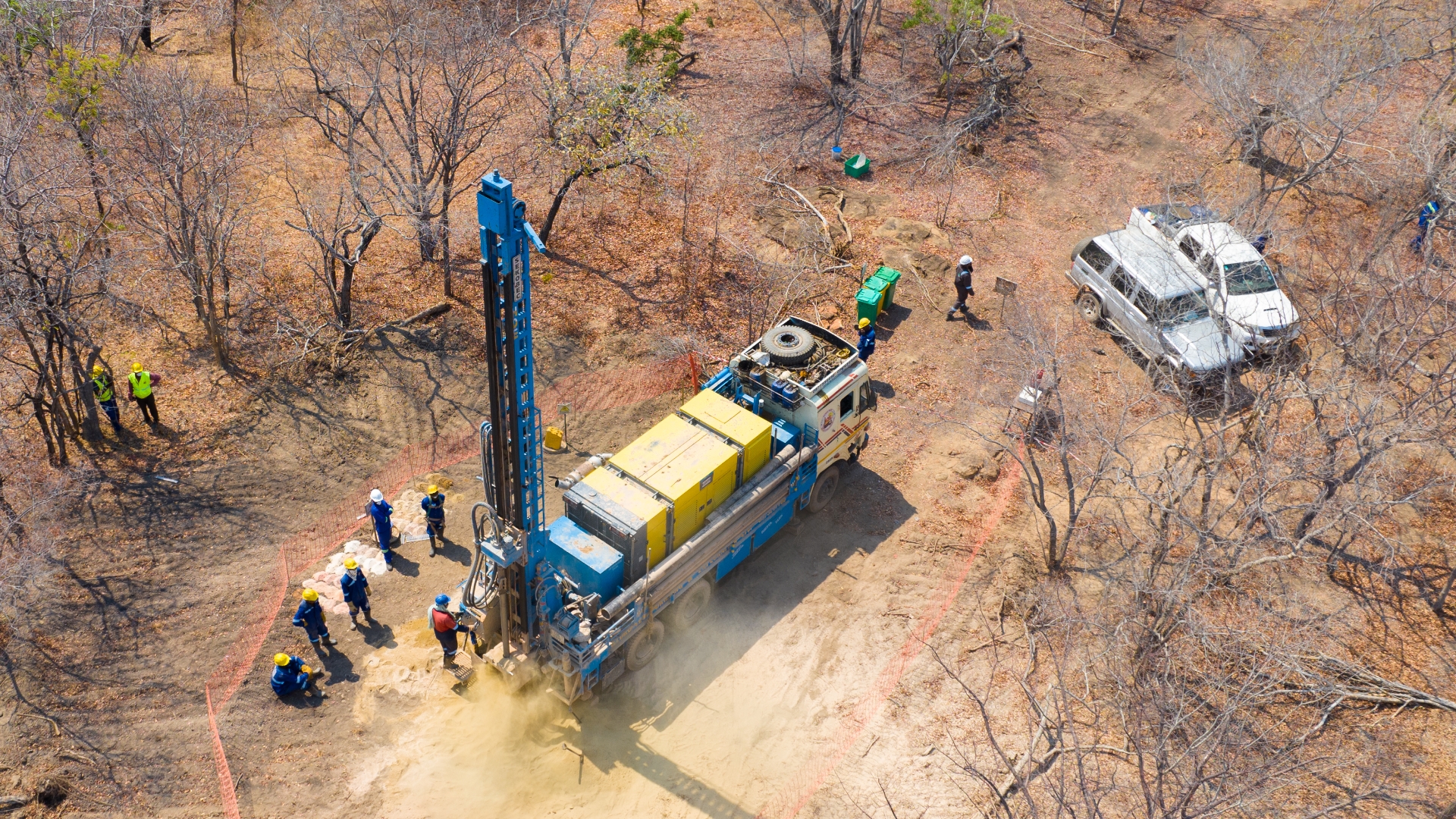
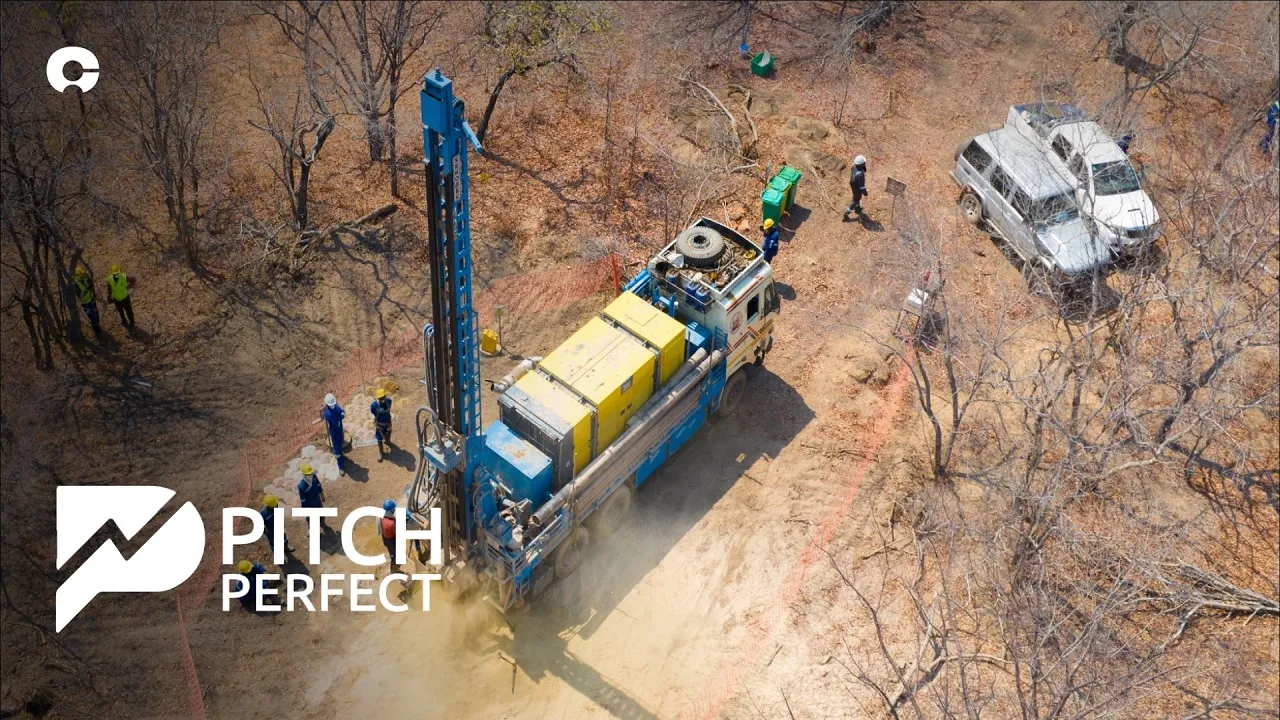
The company's current focus is on resource expansion ahead of a revised feasibility study that incorporates a larger production scale. The largest drilling programme at Muntanga in 18 years is scheduled to commence in April 2026, targeting three priority areas: Muntanga North, which contains eight discrete targets within an 80 square kilometre area; Namakande 1 and 2, two large targets adjacent to the Chisebuka resource; and infill drilling at Chisebuka itself, where a significant portion of the confirmed mineralised zone remains to be sufficiently infill drilled to enable resource conversion. The regional exploration target of 40 to 100 million pounds, based on radiometric and soil geochemical data consistent with known mineralisation, defines the conceptual scale of the district opportunity.
The heap leach flowsheet, which achieved recoveries greater than 90% over the life of mine at low acid consumption of 20 kilograms of sulphuric acid per tonne in the feasibility study, is well suited to incremental expansion. Adding processing capacity to a heap leach operation is less capital-intensive than equivalent expansions of a milling circuit, meaning that resource growth translates more directly into production upside. ESIA and RAP environmental approvals are expected in 2026, and export logistics benefit from access to an established uranium port that can service both western and eastern buyers.
Financial Overview
As of December 2025, the company held A$19 million in cash, against a market capitalisation of A$144 million and an enterprise value of A$125 million, based on a March 2026 share price of A$0.37 and 391.1 million shares on issue. The feasibility study outlines pre-production capital of US$282 million, a post-tax NPV8 of US$243 million, a post-tax IRR of 20.8%, a payback period of 3.5 years, and life-of-mine free cash flow of US$672 million from 25.3 million pounds of production over 12 years. These economics are based solely on the Muntanga and Dibbwi East measured and indicated resources and do not incorporate the 44% of the current JORC resource that was excluded from the study. The company also holds a contingent asset in the form of an ongoing ICSID arbitration against Niger following the 2024 withdrawal of permits for the Madaouela uranium project, which carries a resource of 116 million pounds (99 million pounds attributed to Atomic Eagle owing to 15% Government free-carried interest) at 1,319ppm and represents option value if negotiations result in a resolution.
Risk Factors and Mitigation
- Uranium Price Volatility: Project economics are sensitive to both the spot and term-contract uranium prices. The feasibility study C1 operating cost of US$32.20 per pound provides a meaningful margin to current spot prices, and the 3.5-year payback period reduces the duration of price exposure once in production. Uranium pricing is primarily driven by long-term utility contracts rather than spot volumes, and structural supply deficits forecast to persist through the late 2020s support a durable term price floor. The project's low operating cost positions it in the lower half of the global cost curve, providing resilience across a range of price scenarios.
- Regulatory & Permitting Risks: Advancing to construction requires ESIA and RAP approvals, expected in 2026, as well as ongoing compliance with Zambian mining law. Zambia ranks third in Africa in the Fraser Institute mining survey, operates a stable fiscal regime, and has an established relationship with international mining capital through its copper industry. All resources are contained within granted mining licences, reducing the risk of a sovereign tenure reversal. The company's engagement with the permitting process is running concurrently with the resource expansion programme rather than sequentially, which is consistent with reducing timeline risk.
- Technical & Operational Risks: The feasibility study is based on proven open-pit and heap-leach methods, and metallurgical recoveries of greater than 90% have been demonstrated through test work. However, actual mining, metallurgical, and capital cost outcomes may differ from feasibility estimates, and the project has not yet reached construction. The strategy shift toward resource expansion before updated studies has extended the development timeline relative to the 2025 feasibility study schedule. Heap leach expansion capital intensity is expected to be low, which partially offsets the execution risk of a larger project scope, but this assumption requires validation through updated technical studies.
- Geopolitical & Jurisdictional Risk: Zambia is a stable, democratically governed mining jurisdiction, but operational risks common to African resource projects, including infrastructure reliability, labour relations, and currency movements, remain present. The company's separate Madaouela project in Niger had its mining and exploration permits withdrawn by the state in July 2024, a material precedent for jurisdictional risk within the same corporate portfolio. The Niger situation is subject to ongoing ICSID arbitration, with a letter of intent signed in February 2025, but the outcome and timeline remain uncertain, and the company no longer has any rights to the project. Zambia's more established mining regulatory framework provides a meaningfully different risk profile, but the Niger experience underscores the importance of monitoring sovereign relations.
- Financing Risk: The A$19 million cash balance at December 2025 is sufficient to fund the current exploration programme but falls well short of the US$282 million pre-production capital required by the feasibility study. Advancing to construction will require project-level debt financing, equity raisings, or a strategic partner, all of which depend on market conditions, uranium prices, and the outcome of updated technical studies. The post-tax NPV and IRR metrics from the feasibility study support the project's debt-financing case in principle, and the 3.5-year payback makes the project attractive to lenders, but access to project finance at scale remains a key execution dependency. Zambia's geopolitical neutrality and the project's ability to supply both western and eastern buyers could expand the universe of potential financing partners and offtakers.
Conclusion
Atomic Eagle presents a uranium development asset at a post-feasibility stage, in a Zambian jurisdiction with established mining credentials, at a valuation that is at a discount to comparable peers on an EV-per-pound-of-M&I-resource basis, a discount that widens with exploration success in 2026. The 2025 feasibility study provides a technically validated baseline, while the 44% of the resource is excluded from that study, combined with an exploration target that could materially expand the total resource, defines the upside case for a scaled production operation. The April 2026 regional drill programme represents the most proximate catalyst, with Chisebuka infill results and the Muntanga North and Namakande targets capable of meaningfully increasing the resource base ahead of updated technical studies. The primary execution risks are financing scale and the extended development timeline implied by the strategy shift toward resource growth, set against a uranium market that continues to tighten on both the supply and demand side.
Atomic Eagle Analyst Notes







Charts
Stay Informed

