251-Million-Ounce Gold Deposit Increase Highlights Growth Beyond New Discoveries



Higher gold prices, drilling extensions and acquisition demand strengthen the investment case for advancing known gold deposits toward future production.
- S&P Global's gold deposit inventory increased by 251 million ounces, with more than half of the increase coming from previously known deposits rather than entirely new discoveries.
- Only nine major gold discoveries containing 38 million ounces have been identified since 2020, increasing the importance of further resource definition within established mineralized systems.
- Between 2020 and 2025, 143 of 258 initial gold resource announcements, representing 55%, involved new zones or deposits within existing projects, highlighting opportunities for additional resource growth.
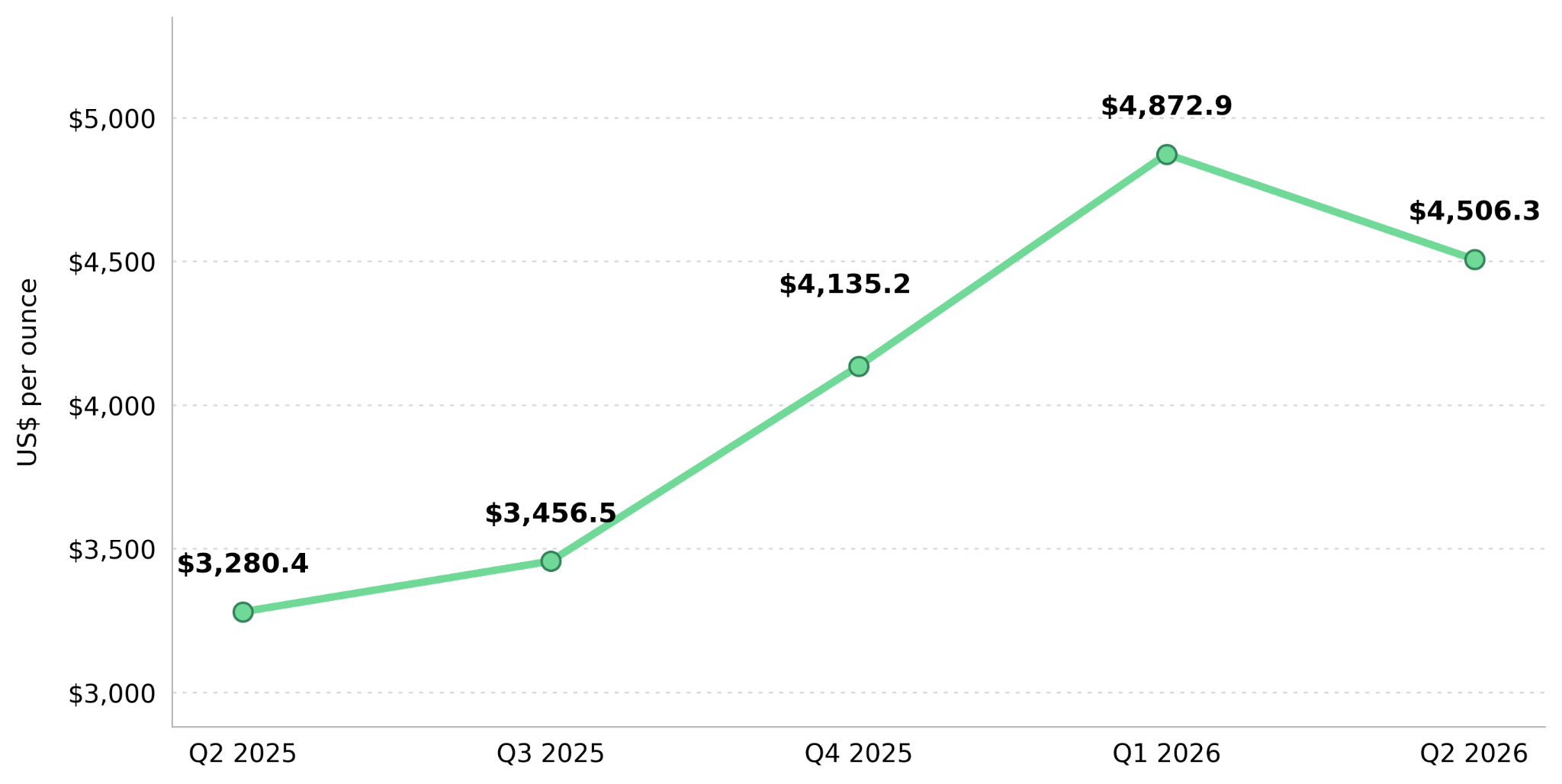
- Gold's average price rose 37% year over year to $4,506.29 per ounce in the second quarter of 2026, increasing the potential economic value of gold resources within established deposits.
- S&P Global's study of 232 mining assets found an average 16-year discovery-to-production timeline across multiple commodities, highlighting the importance of advancing identified gold resources through technical studies and financing.
Known Deposits Drive Most of 251M-Ounce Inventory Gain
S&P Global covered 371 major gold deposits discovered between 1990 and 2025, containing approximately 3.2 billion ounces across mineral resources, reserves, and past production. Its recorded deposit inventory rose by 251 million ounces, or 7%, from the previous assessment, with more than half of the increase coming from previously known deposits. Continued drilling and resource updates can identify additional gold within established deposits, supporting resource growth and future mine development.
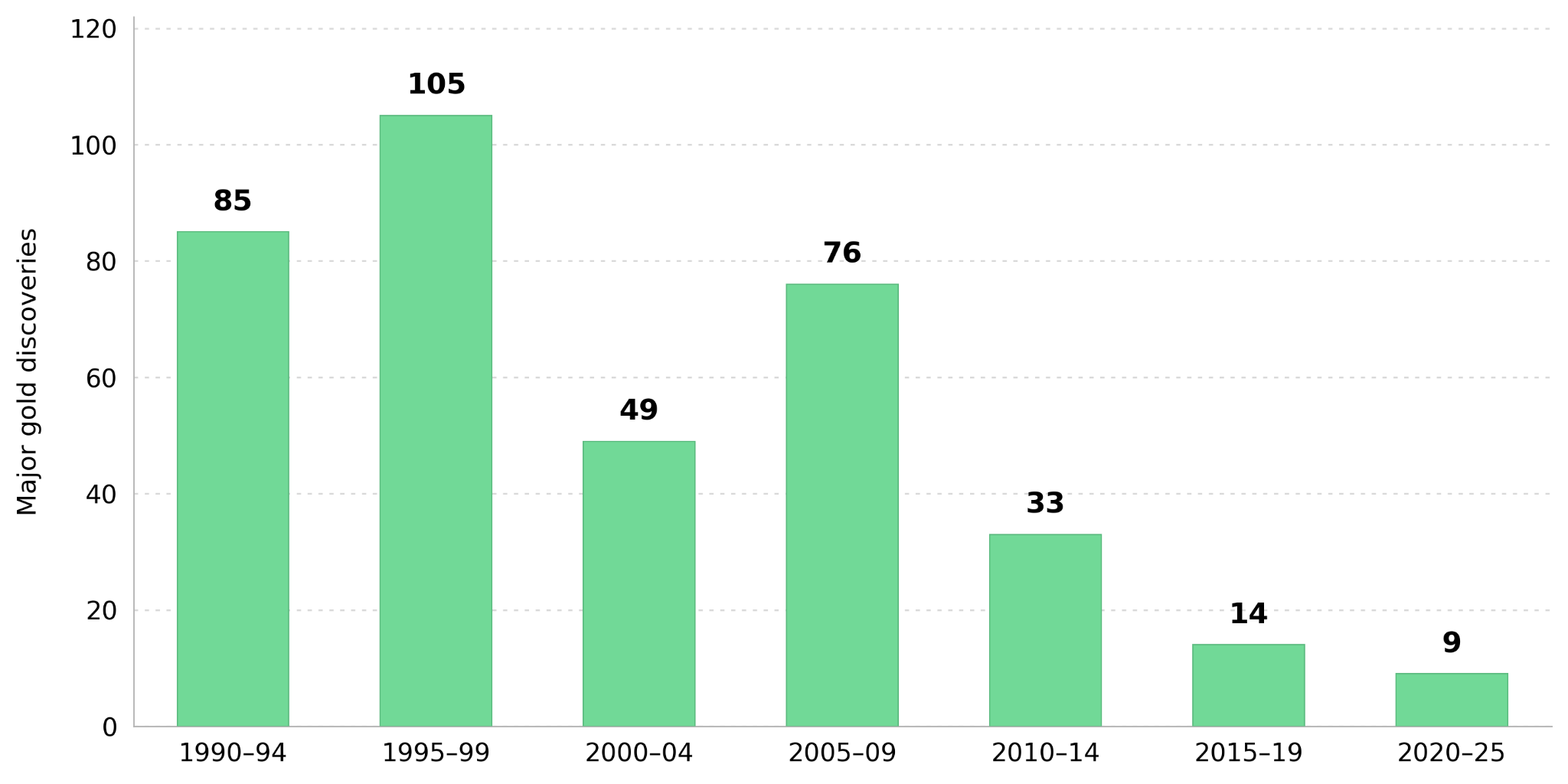
Only nine gold deposits discovered since 2020 have reached S&P Global's 2-million-ounce threshold for a major discovery, containing a combined 38 million ounces across resources, reserves, and past production. Their recorded inventories average 4.3 million ounces, compared with 7.3 million ounces for major discoveries during the 2010s, which have had more time for resource growth.
Between 2020 and 2025, S&P Global recorded 258 initial gold resource announcements totaling 189 million ounces. New zones or deposits within existing projects accounted for 143 announcements, or 55%, compared with 115 from greenfield assets, highlighting established projects as a significant source of additional gold resource identification.
Drilling Extensions Reveal Multiple-Deposit Potential
Drilling beyond existing resource boundaries can identify extensions of known mineralization and new zones within established gold systems. These discoveries can support additional resource estimates and broader mine development plans.
Tudor Gold's drilling results extended gold mineralization at the Perfectstorm Zone by more than 480 meters, identifying higher-grade intervals and additional resource potential at its Treaty Creek Project in British Columbia. The project also hosts the Goldstorm Deposit, containing 24.9 million ounces of indicated gold resources, where a preliminary economic assessment (PEA) is being finalized to evaluate a potential higher-grade underground mining operation.
Joseph Ovsenek, President and Chief Executive Officer of Tudor Gold, highlights the potential for additional gold deposits nearby:
“We have other prospects where we've discovered gold. We want to come up with a maiden resource from this summer's work for another deposit on our ground just to show the potential that we've got room for multiple deposits on our Treaty Creek project as well.”
New Mineralization Supports Higher Output Targets
Infill and expansion drilling can refine proposed mine designs as additional mineralization is incorporated into resource models. These updates can support revised mining schedules, production targets, and project economics.
P2 Gold's drilling results extended gold-copper mineralization at the Sullivan Zone of its Gabbs Project in Nevada, identifying additional mineralization in an area previously modeled as waste. Incorporating this mineralization into future mine plans could improve the ore-to-waste ratio and project economics. An updated mineral resource estimate is targeted for the fourth quarter of 2026, followed by a feasibility study targeted for the first quarter of 2027.
Joseph Ovsenek, President and Chief Executive Officer of P2 Gold, links continued exploration drilling to higher production targets:
"We've been working on our infill and expansion drill program. We keep hitting more and and now we're targeting 150,000 ounces of gold a year and 50 million pounds of copper."
$21.2B Gold Deals Signal Deposit Demand
S&P Global recorded 32 gold-focused acquisitions worth $21.2 billion in 2025, the highest annual value since 2010 and a 10% increase despite 26% fewer transactions. Gold accounted for 64% of the 50 qualifying mining acquisitions, with buyers acquiring more than 162.1 million ounces in gold resources and reserves, highlighting capital commitments to established gold deposits.
Canadian gold assets accounted for $10.59 billion in acquisition value in 2025, while major mining companies represented 34% of buyers. Acquiring established deposits allows mining companies to expand their portfolios of identified resources and potential future mines without relying solely on new discoveries.
Beyond-Pit Exploration Could Extend Mine Life
WGC reported an average gold price of $4,506.29 per ounce in the second quarter of 2026, up 37% year over year. Higher gold prices can increase potential revenue from established deposits, while feasibility studies establish project returns using defined metal-price assumptions, operating costs, and capital requirements.
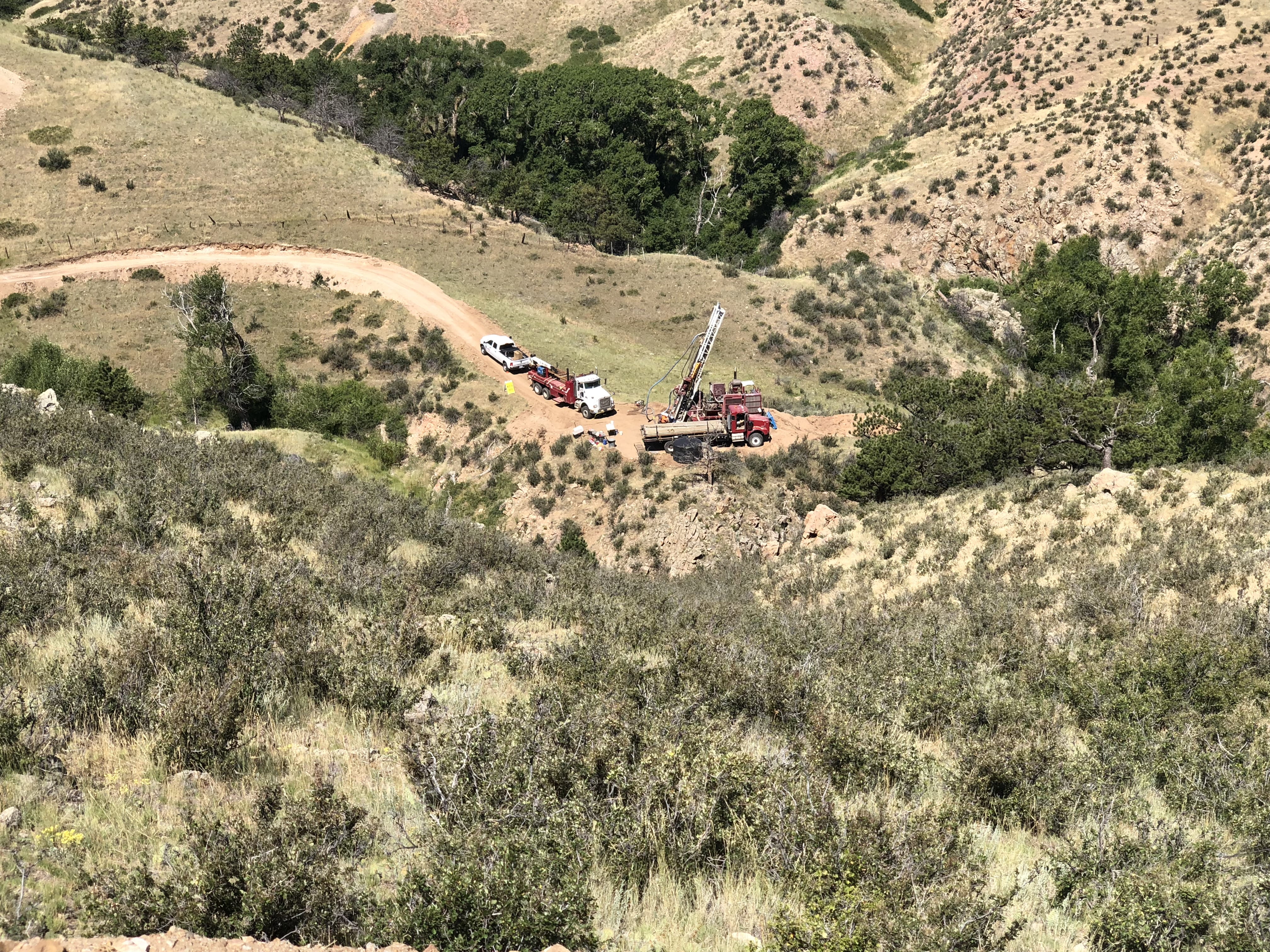
U.S. Gold Corp's March 2026 feasibility study outlines an 11-year mine plan for its CK Gold Project in Wyoming, with an estimated after-tax net present value at a 5% discount rate (NPV5%) of $632 million and a 27% internal rate of return (IRR), based on gold at $3,250 per ounce. The project contains approximately 1.015 million ounces of proven and probable gold reserves, with $394 million in initial capital requirements. Additional exploration below and around the planned pit offers potential to expand resources and extend mine life beyond the current plan.
George Bee, President and Chief Executive Officer of U.S. Gold Corp., describes how further exploration could extend mine life:
“We've defined the first portion of the resource and put it into a feasibility study. We know that we've got resources below the pit, and we're now looking more broadly at the exploration around the pit. So, additional resources to add to the mine life, additional potential for recovering some of the gold.”
Long Mine Timelines Reinforce Need for Development
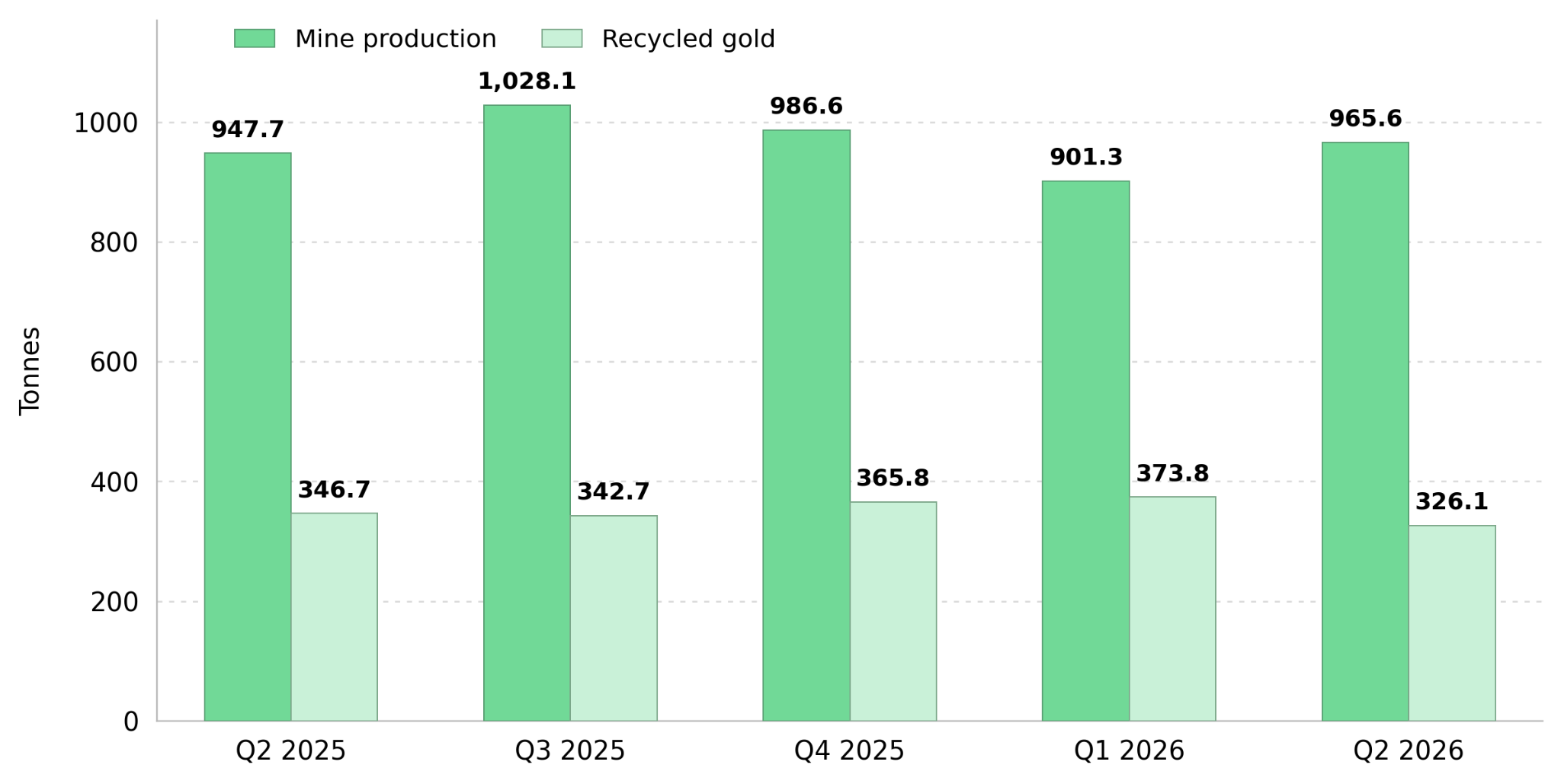
Global gold mine production rose 2% year over year to 965.6 tonnes in the second quarter of 2026, while first-half output increased 3% to 1,867 tonnes. Total second-quarter gold supply remained broadly unchanged at 1,268.9 tonnes, as a 6% decline in recycling offset higher mine production. These figures highlight the gradual contribution of additional mine output to overall gold supply.
S&P Global's study of 232 mining assets across multiple commodities found an average 16-year discovery-to-production timeline. This lengthy development cycle increases the importance of established gold deposits, where continued drilling can expand identified resources while technical studies, permitting, and financing advance projects toward production.
The Investment Thesis for Gold
- Previously known deposits contributed more than half of the 251-million-ounce increase in recorded gold, highlighting the role of established assets in the industry's deposit inventory.
- Developers can extend known mineralization through further drilling and improve resource confidence, supporting larger mine plans and potential mine-life extensions.
- Explorers identifying mineralization in areas previously considered waste could increase available ore relative to waste rock, improving proposed mine economics.
- Gold's average price rose 37% year over year to $4,506.29 per ounce in the second quarter of 2026, strengthening the potential economics of established deposits under higher gold-price assumptions.
- Completed feasibility studies and major permitting approvals provide clearer development requirements, helping gold projects establish their capital needs and potential construction timelines.
- The 16-year average discovery-to-production timeline reinforces the importance of advancing identified gold deposits toward future production.
Future gold supply will depend not only on new discoveries but also on the continued expansion and development of established deposits. Further exploration can increase identified resources and support larger mine plans, while economic studies and development progress bring these projects closer to production. Gold projects combining established mineral resources, additional exploration potential, and a clear development pathway offer opportunities to contribute to long-term mine supply and capture value beyond their initially defined deposits.
TL;DR
S&P Global's recorded gold deposit inventory increased by 251 million ounces, with more than half of the growth coming from previously known deposits. Only nine major gold discoveries have been identified since 2020, while 55% of initial resource announcements between 2020 and 2025 involved existing projects. Continued drilling can expand mineral resources, refine mine plans, and support future production. Gold acquisitions reached $21.2 billion in 2025, while higher gold prices strengthened the potential economics of established deposits. With mining projects averaging 16 years from discovery to production across multiple commodities, advancing known resources remains important to long-term gold supply growth.
FAQs (AI-Generated)
Analyst's Notes





Subscribe to Our Channel








Stay Informed