




Copper Fell the Day Chile's Biggest Mine Stopped, With 39 Days' Cover


Regulator-controlled restart risk, a looming strike vote and concentrated exchange stocks leave copper supply exposed despite softer prices.
- The world's largest copper mine suspended all operations on September 23, 2026 after a fatality, removing about 3,455 tonnes/day until Chile's mining regulator clears a restart.
- London Metal Exchange (LME) three-month copper fell 1.13% to $14,615.50 per metric ton on September 23, 2026 despite the mine halt, while Commodity Exchange (COMEX) copper fell to $6.74 a pound.
- LME warehouses held 133,725 metric tons of available copper on September 21, 2026, while 69% of exchange-monitored stocks sat in COMEX warehouses.
- Chilean mine production fell 6.6% in the first half of 2026 and world concentrate output fell 2.6%, so no spare Chilean tonnage exists to cover the gap.
- A supervisors' strike vote runs September 28-30, 2026, while an LME cash-to-three-month discount of $86 per metric ton or wider for 10 straight sessions would invalidate the supply-tightness case.
Chile's Largest Copper Mine Halts & the Price Falls 1.1%
Operations at Escondida in Chile's Atacama Desert were suspended on Wednesday, September 23, 2026, after a worker was killed during maintenance. Chile's mining regulator, Sernageomin, confirmed the fatality and said acting national director Mauricio Lorca ordered its regional team deployed to open an investigation. LME three-month copper settled 1.13% lower at $14,615.50 a tonne that session.
The mine produced 1,261,200 tonnes in the year to June 30, 2026, a rate near 3,455 tonnes a day. Metal actually available in LME warehouses stood at 133,725 tonnes on September 21, roughly 39 days of the halted mine's output.
Fatality Halts 3,455 Tonnes of Daily Output
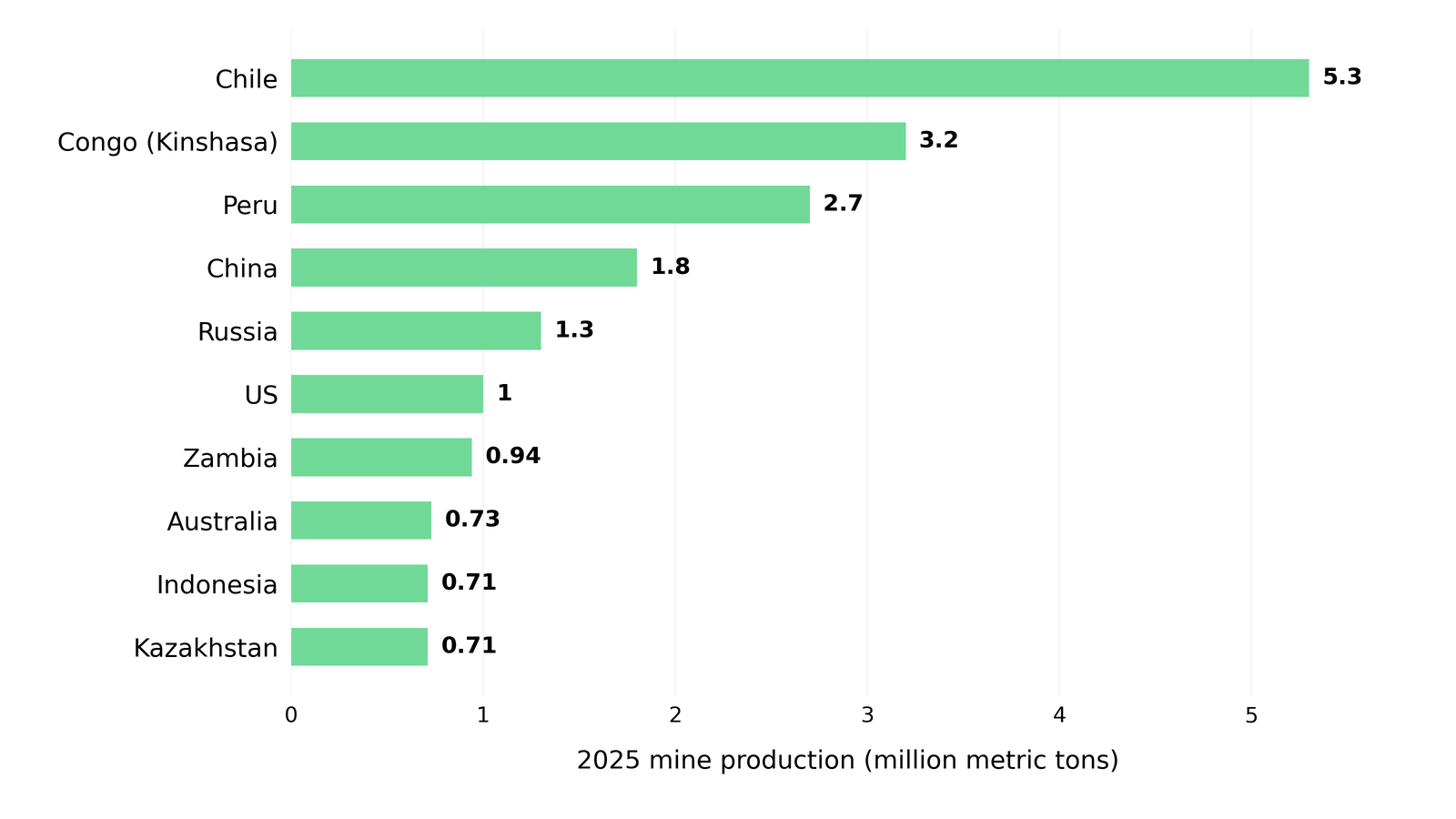
The shutdown removes about 3,455 metric tons of copper per day with no restart timeline. Sernageomin controls the restart because operations can resume only after inspectors verify safe conditions. The outage hit a weaker supply base after Chilean mine production fell 6.6% in the first half of 2026 as output declined at El Teniente, Escondida, and Spence, leaving less domestic supply to offset the loss.
A second supply risk comes from labor talks, with about 1,020 Escondida supervisors rejecting the latest offer and calling a strike vote for September 28-30. If workers reject the offer when the contract expires September 30, mandatory mediation lasts five days and can extend by another five before a legal strike.
A Strike Vote on September 28 Extends the Supply Gap
Sernageomin controls the restart timing, while unresolved labor talks could extend Escondida's supply disruption beyond any safety clearance. Alexis Barrera, President of the Escondida supervisors' union, says the two sides remain very far apart and far from an agreement.
Concentrate Scarcity Compresses Smelter Margins
Custom copper smelters face lower margins because they buy concentrate and earn treatment charges to refine it. Global concentrate output fell 2.6% in the first half of 2026 while refined production rose 2.4%, increasing competition for feed. Escondida's halt removes additional concentrate supply, tightening that competition while the outage lasts.
Single-asset copper producers outside Chile, whose revenue comes from one unhedged mine, capture the full move in copper prices. Their outage risk partly depends on whether local regulators can block a restart after an incident, as Sernageomin can in Chile.
Single-asset exposure also raises downside risk because one fatality, permit suspension, or grade miss can halt all mine revenue. With restart timing and strike outcomes uncertain, position size becomes the main controllable risk, while operational concentration can push copper equities down more than the metal price.
Falling Ore Grades and Stranded Stocks Keep Copper Supply Tight
Exchange inventory reports where copper sits, not whether enough of it exists. Eighteen months of tariff-driven shipments into the US have concentrated most exchange-monitored copper in COMEX warehouses, leaving the rest of the world a thin buffer against any single Chilean outage. Behind that buffer, copper is getting harder to produce: Escondida is targeting about 0.70% feed grade for the 2027 financial year, roughly one-third below 2025, so more ore must be processed for each tonne of copper even after a restart.
The tight supply outlook fails if the LME cash-to-three-month spread returns to a discount of $86 a tonne or wider for ten consecutive sessions, reported daily in LME closing prices.
Copper's decline on the day the world's largest mine stopped discounts a shrinking grade base. Lower grades raise the value of undeveloped higher-grade deposits, and that scarcity belongs in valuations. Single-asset producers warrant a higher discount rate because one incident can halt all revenue. The value of falling grades accrues to owners of undeveloped higher-grade deposits, though those carry their own financing and permitting risk before any tonne reaches market.
Analyst's Notes





Subscribe to Our Channel



Stay Informed


