Equipment Hubs Within a 6-Hour Drive Cut CK Gold’s Need for Warehoused Spares


U.S. Gold Corp's CK Gold has equipment hubs, contractor fleets, grid power, and Cheyenne labor nearby, while fuel would weigh on production if prices persist.
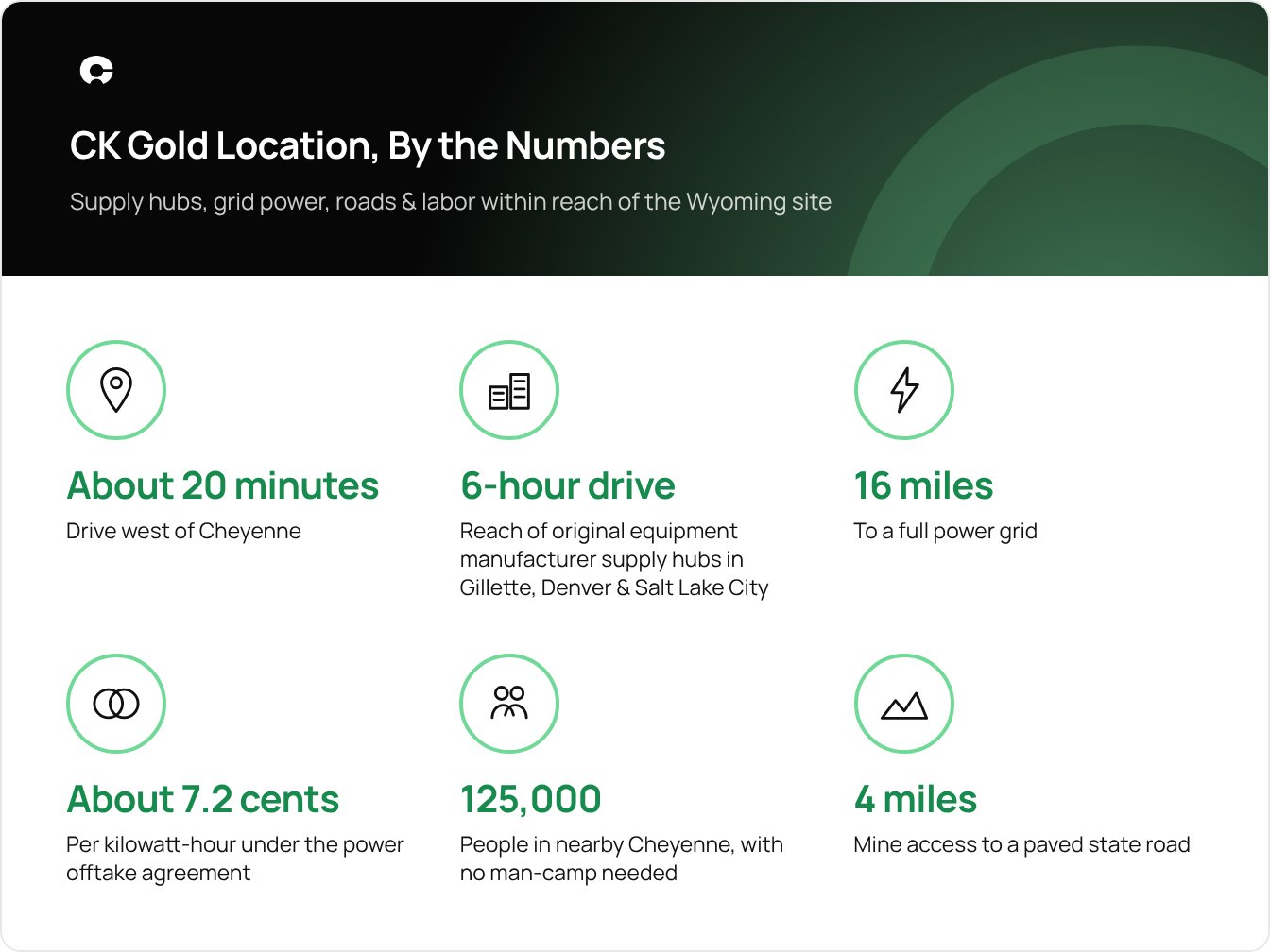
- CK Gold is about a 20-minute drive west of Cheyenne and about 3 miles north of Interstate 80.
- Original equipment manufacturer supply hubs in Gillette, Denver, and Salt Lake City are all within a 6-hour drive.
- Grid power within 16 miles is subject to an offtake agreement at about 7.2 cents per kilowatt-hour.
- Proximity to Cheyenne means the project requires no man-camp.
- Management expects fuel to have little impact on construction but a very large impact on production if prices remain at current levels.
What Has Happened
U.S. Gold Corp (Nasdaq: USAU) has put the location of its CK Gold project in Wyoming at the center of its shovel-ready case. In November 2026, it presented the gold-copper project as one in which all the major vendors of mining and processing equipment are represented in the area. Road infrastructure and the power provider are already in place.
The site is about a 20-minute drive west of Cheyenne and about 3 miles north of Interstate 80, with initial capital estimated at approximately US$394 million plus pre-production owners' costs. Management expects fuel, if prices stay where they are, to weigh on production more than on construction.
Equipment, Contractors & Supply Hubs
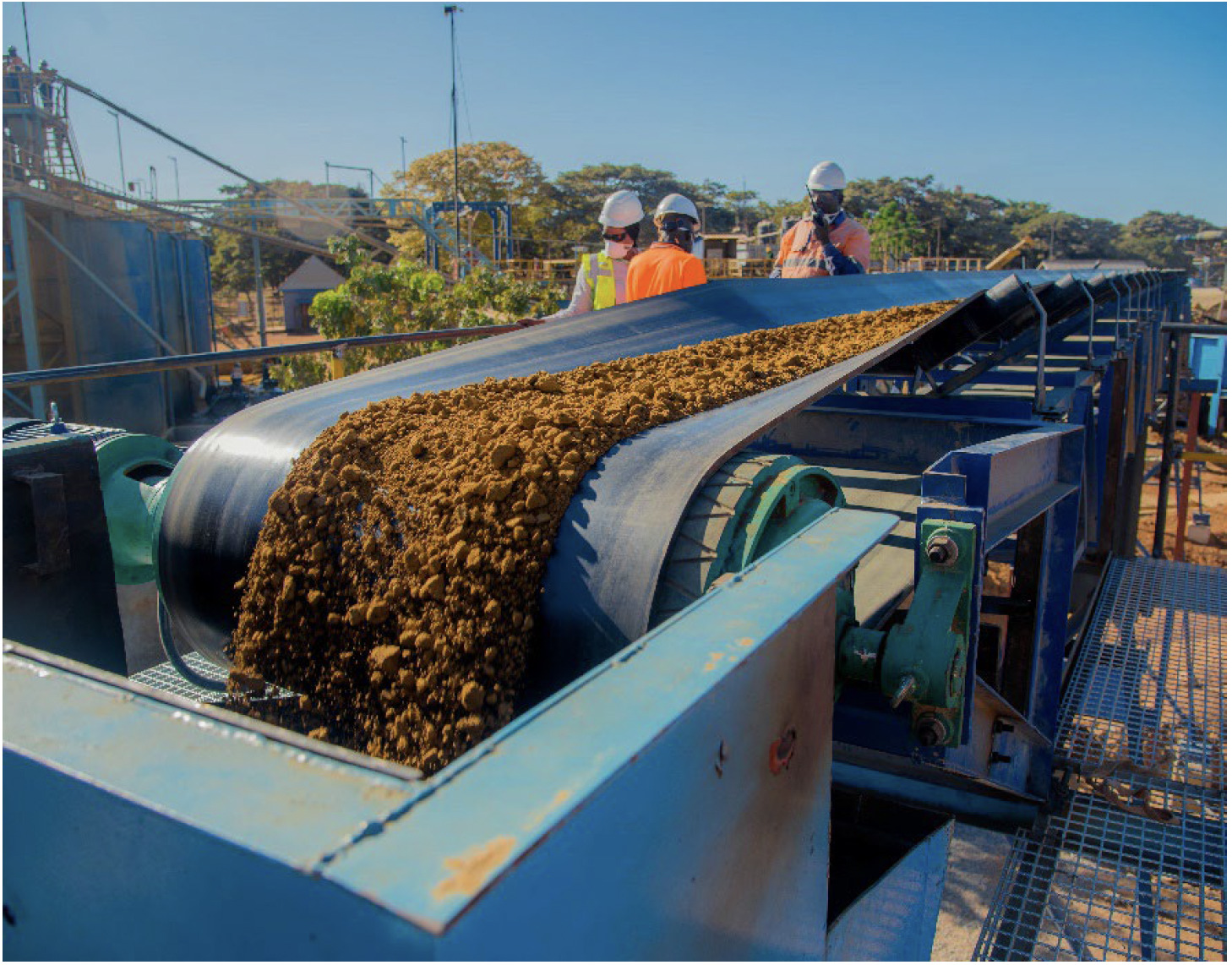
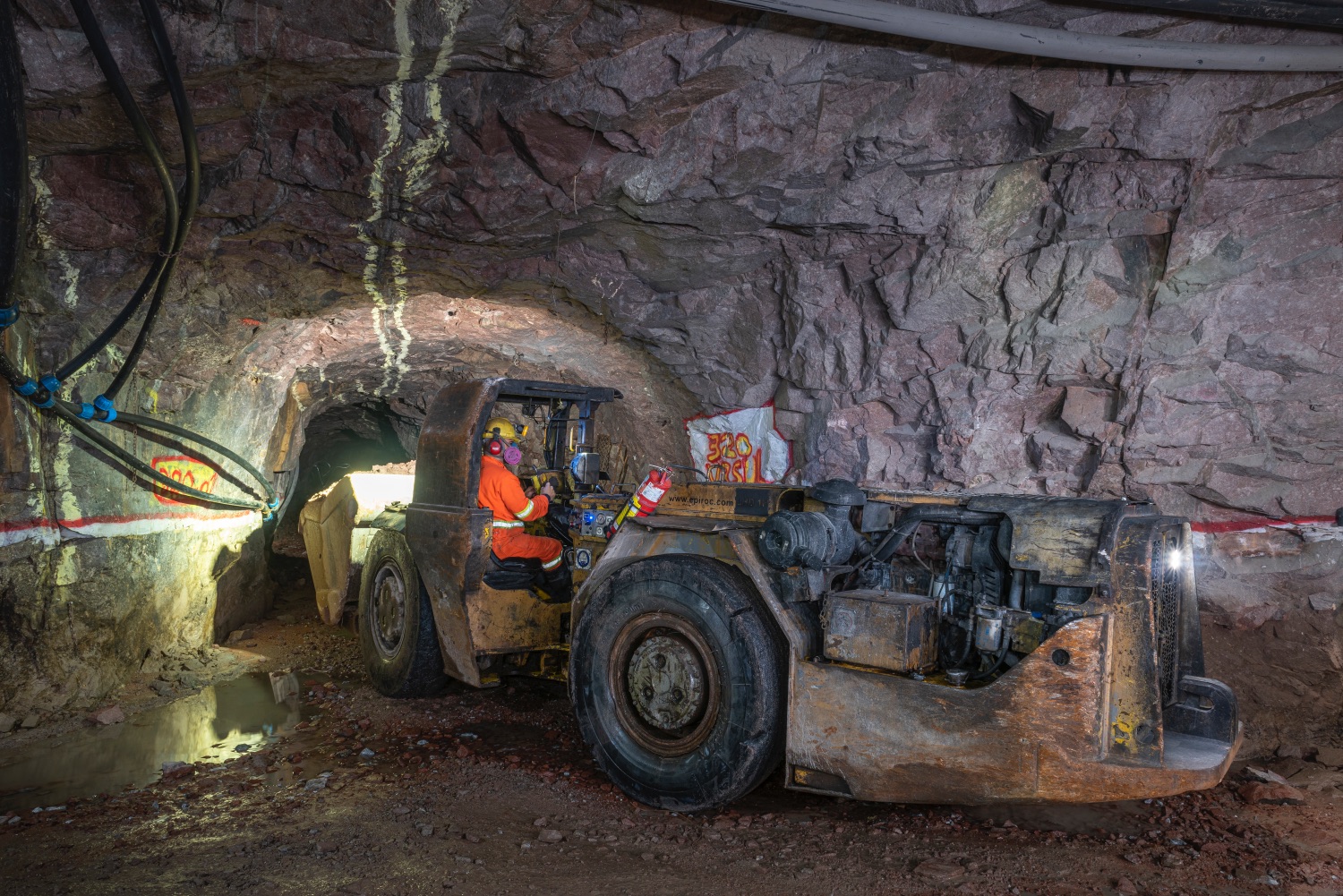
The mine plan uses simple truck-and-shovel mining similar to nearby quarry operations. A small fleet of 100- to 150-ton trucks will work alongside 20-yard shovels and loaders over very short haul distances and on easy terrain, and many existing equipment fleets are operated by cost-competitive contractors. The plant follows a simple, well-proven sequence of crushing, grinding, flotation, and dry-stack tailings storage. Flotation separates minerals from waste rock using air bubbles, and dry stacking filters water from the tailings before they are stored. The primary grind uses a semi-autogenous grinding mill, which incorporates the ore itself into the grinding charge, and a ball mill, a rotating drum that grinds ore with steel balls.
Original equipment manufacturer supply hubs in Gillette, Wyoming, Denver, Colorado, and Salt Lake City, Utah, are all within a 6-hour drive. That reach reduces the need for warehousing and critical spares at the mine. The company is soliciting bids for major equipment for a process plant designed to the feasibility-study level. Engaging contractors early has already improved both the capital cost and the construction schedule, and Jameson Cell flotation technology from Glencore Technology Inc. was adopted to improve recoveries, capital costs, and operating costs. Vendor financing is among the funding options under review.
Non-Independent Chairman and Co-founder of U.S. Gold Corp, Luke Norman, links the plant design to a facility the company will not have to build:
"So we'll be selling a concentrate right at the gate, so we don't have to build smelting facilities or any of that, which helps again bring down cost of development."
The gold-copper concentrate is sent to off-site smelters, and the operation produces little to no emissions on site. The concentrate itself is high-value, with little or no deleterious elements, the impurities that smelters penalize.
Power, Roads & Labor Near Cheyenne
A full power grid runs within 16 miles of the project, and U.S. Gold Corp has a power offtake agreement at about 7.2 cents per kilowatt-hour. Power pricing from BHE, which owns generation inside Wyoming, is competitive. Water supply is covered by an Outside Water Users Agreement completed in November 2025, and the Cheyenne City Council ratified the water purchase agreement the same month. The plant recycles vacuum-filtered water to limit consumption.
Mine access runs 4 miles to a paved state road, and preliminary site construction was initiated in January 2026. The site plan shows the plant, an 80-acre open pit, and the dry-stack tailings, with pre-sorted rock storage set aside for later commercial use. Interstate 80 and major railways pass next to the project, and the highway is a major logistics corridor for bringing in equipment. The project is approximately 1.5 hours north of Denver International Airport.
Proximity to Cheyenne, a city of 125,000 people, means labor and support services are nearby, with no man-camp and a short commute. The project is expected to create approximately 255 local direct jobs, and its administration office is in town, 20 miles from the site.
Norman counts every input the mine needs as already in reach of the site:
"So, all the key ingredients we need to develop this mine and ultimately harvest gold and copper are sitting right there."
Fuel Costs in Construction & Operations
Fuel pricing in southeast Wyoming has been competitive. If fuel prices remain at current levels, management expects them to affect the project's profit. The size of that effect depends on which phase of the mine is underway.
On fuel, Norman separates the exposure by phase:
"Through the construction, it's not that impactful, but obviously through the ongoing production, it will have a very large impact."
Today’s war-driven fuel prices will eventually rebalance under management’s working assumption, though the outcome of the conflict in the Middle East is unknown. The production phase covers an 11-year mine life at about 20,000 tons per day, averaging approximately 85,000 gold-equivalent ounces a year.
The March 2026 study’s mining figures give the scale of that operating phase. A total of 140,597 thousand tons is mined over the mine life, including 74,527 thousand tons of ore, at a strip ratio of 0.89 tons of waste to each ton of ore. Mining costs US$3.88 per ton mined, or US$7.30 per ton processed, within a total site operating cost of US$18.462 per ton processed.
Broader Context
CK Gold is on State of Wyoming land with no direct federal involvement, and its approvals were issued by Wyoming state agencies. Management contrasts that with federal ground elsewhere in the US, where it describes permitting as a real slow process for public companies. Its Mine Operating Permit was approved in April 2024 after 2 years of preparatory work and approximately 20 months of agency review, and the Industrial Siting Permit has been updated through December 2027.
Wyoming is a resource state with revenues from coal, oil and gas, and trona. Management goes further on the siting, arguing that CK Gold's location may be the best in the US, with a workforce close at hand, relatively flat topography, and a major highway system. Interstate 80, the corridor adjacent to the project, runs from Chicago to San Francisco, and existing aggregate operations are located near the site. Copper is now on the US critical minerals list, and ongoing domestic demand for critical minerals and a supportive policy environment for American mining projects are among the company’s upcoming catalysts.
CK Gold is one of the few fully permitted, shovel-ready gold-copper projects in the US, and management credits the location as central to taking it from an exploration project in 2020 to that status.
What to Watch Next
Project financing comes first, and U.S. Gold Corp hopes to reach a definitive project financing agreement around January, with project development to begin immediately thereafter. In August, the company had targeted a financing announcement and potential construction start as soon as late 2026.
U.S. Gold Corp is amending its gold price sensitivities, which do not yet reflect the rise in the copper price.
Under the August plan, an 18- to 24-month build is expected to support first production as soon as late 2028, with the development and operations team built out in 2027.
FAQs (AI-Generated)
Analyst's Notes





Subscribe to Our Channel



Stay Informed